Australia's largest independent migration law firm. Get a FREE Consultation
Need help? Our lawyers and migration agents are available 7 days a week to assist.


Tell us about your situation, and our immigration lawyers will get back to you shortly.
Tell us about your situation, and our immigration lawyers will get back to you shortly.


2025 Telstra Best of Business Awards Nominee
Australia offers strong career opportunities for qualified Civil Engineers, driven by ongoing infrastructure development and population growth. Civil Engineer (ANZSCO 233211) is classified as a skilled occupation within the Civil Engineering Professionals unit group, and is a commonly nominated occupation for skilled migration. Skilled migration pathways enable engineers to secure long-term employment and permanent residency.
If you are considering migrating to Australia as a Civil Engineer you need to be aware the process involves satisfying a combination of migration law requirements, skills assessment criteria, and visa eligibility thresholds.
A formal qualification, typically a bachelor degree or higher in Civil Engineering or a closely related discipline, is required for skills assessment. The assessing authority for this occupation is Engineers Australia (EA), and English language proficiency is generally required for assessment. Understanding skills assessment requirements and visa options is essential for a smooth transition into the Australian workforce. Applicants must meet current migration policies and visa subclass requirements to apply for skilled migration as a Civil Engineer.
Australian Migration Lawyers’ legal professionals deliver extensive expertise and proven experience, guiding you confidently through complex legal and bureaucratic processes to help you achieve a successful outcome.

Winner of Most Trusted Australian Migration Law Firm 2023-2026

Ranked 1st for migration law in 2023, 2024 & 2025

Ranked in the top migration lawyers 2023, 2024, 2025 & 2026

Ranked the best migration law firm 2024 & 2025
Tell us about your situation, and we will get back to you shortly.
Tell us about your situation, and we will get back to you shortly.


There are no hidden costs for our services. Our fees are clearly set out in a fee agreement.

From the first same-day response to the granting of your visa, you’ll have direct access to a lawyer.

Our experienced lawyers will give you regular updates and clear explanations of visa pathways.

We offer a client satisfaction guarantee in relation to our visa application services.

3 - 6 months installment options available on some visa types.

Civil Engineers design, plan, and oversee the construction and maintenance of infrastructure projects. Their responsibilities typically include:
Civil Engineers play a critical role in both public infrastructure and private sector developments.
Civil Engineer (ANZSCO 233211) is part of Category 2332 Civil Engineering Professionals. It is a Skill Level 1 occupation, requiring a bachelor degree or higher qualification in engineering or a closely related field. Most occupations in this unit group require a level of skill commensurate with a bachelor degree or higher qualification.
Australia continues to invest heavily in infrastructure, including transport networks, water systems, and urban development. Government and private sector projects have created sustained demand for Civil Engineers across multiple disciplines.
Workforce shortages exist in several regions, particularly in large infrastructure projects and regional development initiatives, increasing opportunities for skilled migrants.

Australia continues to invest heavily in infrastructure, including transport networks, water systems, and urban development. Government and private sector projects have created sustained demand for Civil Engineers across multiple disciplines.
Workforce shortages exist in several regions, particularly in large infrastructure projects and regional development initiatives, increasing opportunities for skilled migrants.
Civil Engineers in Australia work across a variety of environments, including:
Civil Engineers in Australia typically earn:
Salaries vary depending on experience, project scale, and location, with higher earnings often available in major infrastructure projects and remote areas.
Civil Engineers may benefit from:

The primary assessing authority for Civil Engineers is Engineers Australia. A positive skills assessment is required for skilled migration visas.
Applicants typically need:
A formal qualification is required, and relevant professional work experience is essential for a Competency Demonstration Report (CDR) assessment. Applicants must demonstrate practical civil engineering experience that aligns with the occupation's duties and Engineers Australia competency requirements. A CDR report must demonstrate civil engineering competencies through real workplace projects, technical problem-solving, and professional experience. Overseas civil engineering work experience is accepted for CDR assessment, provided it is relevant and well-documented. Proficiency in English, evidenced by scores such as IELTS 6.0-7.0, is typically required for Civil Engineers applying for jobs in Australia.
If the qualification is not accredited under international agreements, additional competency documentation is required.
Engineers Australia offers several assessment pathways:
The appropriate pathway depends on the applicant’s educational background and professional experience.

A points-tested visa that allows Civil Engineers to live and work anywhere in Australia without employer or state sponsorship. Requires a positive skills assessment and sufficient points.
Requires nomination by a state or territory government. Provides additional points and may prioritise engineers in high-demand specialisations.
For engineers willing to live and work in regional Australia, the Skilled Work Regional (Provisional) visa (Subclass 491) is one of several skilled employer sponsored regional visa options available to Civil Engineers. This visa offers a pathway to permanent residency after meeting residency and income requirements.
Allows Australian employers to sponsor Civil Engineers to fill workforce shortages. This visa can lead to permanent residency through employer nomination pathways.
Provides permanent residency for Civil Engineers sponsored by an Australian employer, subject to eligibility criteria including skills and experience.

We identify the most appropriate Engineers Australia pathway and assist with preparing a strong application, including CDR reports where required.
Our team evaluates your eligibility across multiple visa subclasses and develops a strategy to maximise your migration outcome.
We assist in preparing accurate and compliant documentation to reduce delays and strengthen your application.
If your application is refused, we provide advice and representation for review or appeal options where available.
We offer guidance on transitioning to life and work in Australia, including professional registration and employment considerations.
Processing times depend on application completeness and government priorities.

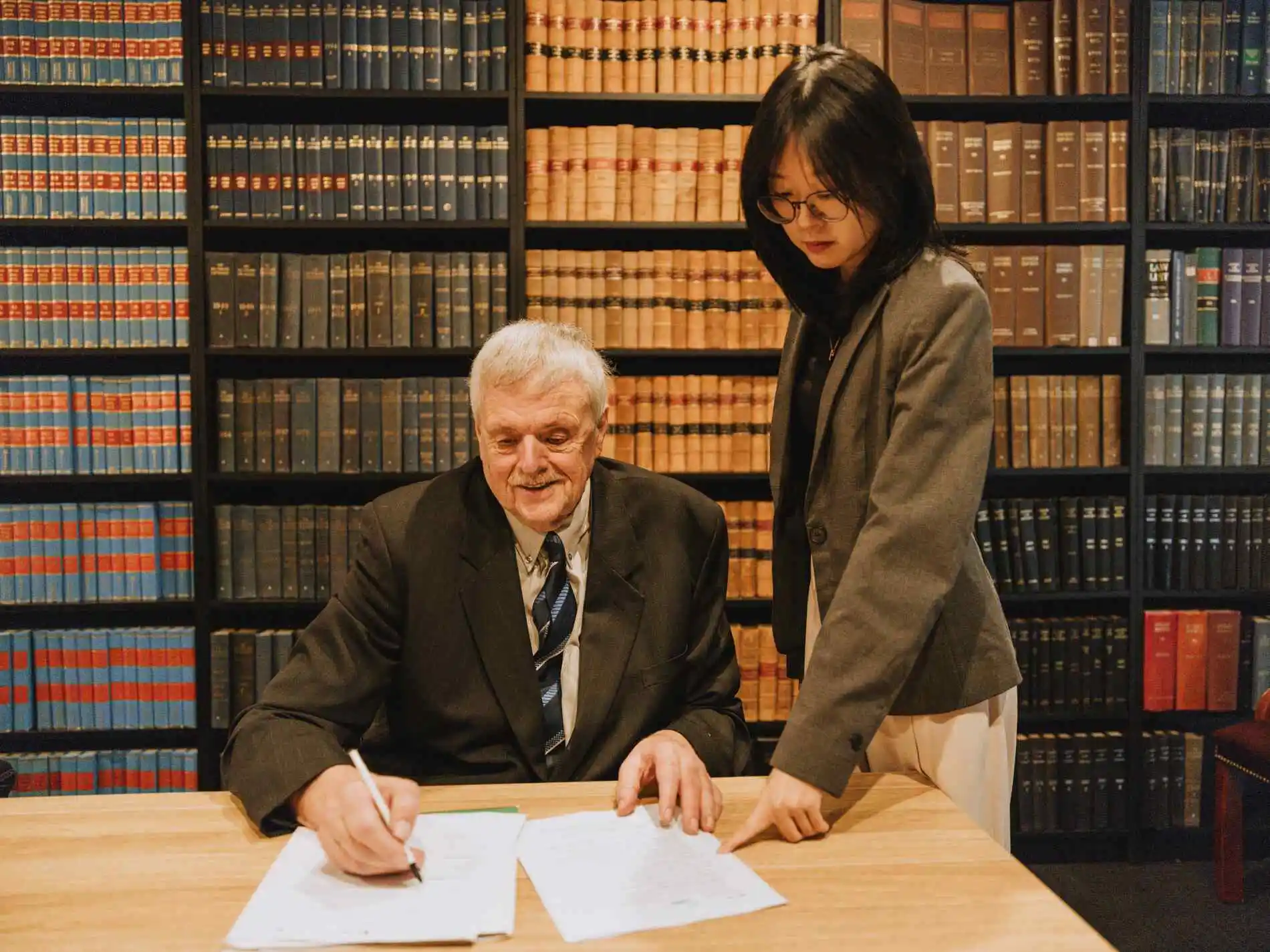
Civil Engineers are highly sought after in Australia’s growing infrastructure sector. With the right qualifications and migration strategy, you can secure long-term career opportunities and a pathway to permanent residency. Early preparation and expert guidance can significantly improve your chances of success.
Applying for a visa to Australia can be complex. With help from an Australian Migration Lawyer, we can untangle this complexity, and help you apply for the right visa.

Organise a consultation time to speak with one of our lawyers. You can meet with us in person, via Zoom or telephone. Following this, we will send you paperwork that confirms our engagement to represent you.

We will prepare written submissions in support of your visa application. This will be based on your individual circumstances, and supported by evidence where appropriate.

We submit your application to the relevant body (Department of Home Affairs, courts or tribunal). We will continue to update you concerning the status of your application.

We will keep you informed about your application, and notify you of the outcome. If you receive an unfavourable outcome and we can reapply, we will!




.jpg)

%20(1).webp)
%20(1).webp)


.jpg)



.jpg)
.jpg)

%20(1)%20(1).webp)
%20(1)%20(1).webp)

%20(1).webp)
%20(1).webp)
%20(1).webp)


.jpg)

%20(3).jpg)

.jpg)




%20(1).webp)

%20(1).webp)




%20(7).jpg)
.jpg)
.jpg)
.jpg)
We offer professional migration advice and support, no matter where you are based. Those located in Australia have the choice of meeting with us at one of our offices or online, and for those offshore, we are available to you online.


Yes. A positive skills assessment from Engineers Australia is required for most skilled migration visas. Registration or licensing may be required for Civil Engineers in Australia, and most Australian states require a Professional Engineer's Licence to practice independently.
Degrees accredited under international agreements such as the Washington Accord are generally accepted. Other qualifications may be assessed through the CDR pathway.
Work experience is not always mandatory for skills assessment, but it can improve your points score and employment prospects. Some visa pathways may require relevant experience.
Yes. Most skilled and employer-sponsored visas allow you to include your partner and dependent children.
Civil Engineers typically earn between AUD 70,000 and over AUD 110,000 depending on experience and role.
The full migration process generally takes between 8 months and 18 months, depending on skills assessment, visa type, and individual factors.
If you are unsure which approach applies to your situation, or you need representation for any skilled migration matter, contact Australian Migration Lawyers today for tailored advice.
Rest assured you can partner with Australian Migration Lawyers’ trusted legal professionals and take the stress out of the paperwork so you can move forward on your skilled migration process with the clarity you deserve.
Perry Q Wood is Immediate Past President of the Australian Institute of Administrative Law and one of Australia’s leading administrative, immigration and human rights lawyers.
Tell us a little about your situation, and one of our migration lawyers will contact you as soon as possible.
Our experienced migration lawyers are here to help —risk-free. Ask about our No Visa, No Fee options and we'll guide you through every step of your journey.
No Visa, No Fee T's and C's apply
.webp)

%402x.svg)